


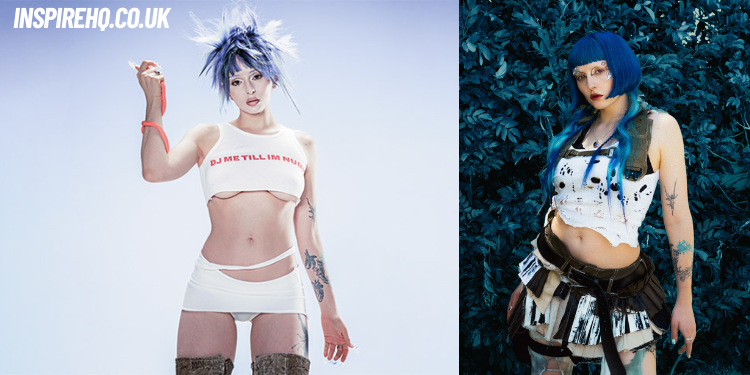
In this article, we’ll explore Ashnikko Slumber Party, a bold and empowering track that not only captured the internet’s attention but also redefined queer pop for a new generation. Featuring Princess Nokia, “Slumber Party” quickly became a standout single from Ashnikko’s Demidevil mixtape, thanks to its fearless exploration of sexuality, feminine power, and unapologetic freedom. But the song is more than just a viral hit—it’s a cultural marker of Gen Z’s evolving musical taste and openness to queer narratives. From its creation to its social media explosion, here’s how “Ashnikko Slumber Party” became a defining moment in Ashnikko’s career and a queer anthem for millions.
Quick Bio:
| Full Name | Ashton Nicole Casey |
|---|---|
| Stage Name | Ashnikko |
| Date of Birth | February 19, 1996 |
| Age | 29 (as of 2025) |
| Birthplace | Oak Ridge, North Carolina, USA |
| Height | 5 ft 3 in (160 cm) |
| Weight | Approx. 121 lbs (55 kg) |
| Gender Identity | Genderfluid (she/they) |
| Sexual Orientation | Pansexual |
| Profession | Singer, Songwriter, Rapper |
| Notable Song | “Slumber Party” (feat. Princess Nokia) |
| Breakout Hit | “Stupid” (feat. Yung Baby Tate) |
| Net Worth | Estimated $2–4 million |
| Social Media | @ashnikko (IG, TikTok, X) |
Who Is Ashnikko?
Ashnikko, whose real name is Ashton Nicole Casey, was born on February 19, 1996, in Oak Ridge, North Carolina, and later raised in Greensboro. She stands at approximately 5 feet 3 inches (160 cm) tall and is widely recognized for her bright blue hair, punk-pop aesthetic, and a fierce presence both on and off stage. As of 2025, she is 29 years old and identifies as genderfluid, using she/they pronouns, and is openly pansexual.
Before her breakout, Ashnikko had already spent years building her unique sound—an electric blend of hyperpop, hip-hop, trap, and alt-pop—fueled by influences such as Nicki Minaj, Avril Lavigne, M.I.A., and Björk. She moved to London as a teenager, and it was there that her career began to take shape. Her 2019 track “Stupid” featuring Yung Baby Tate catapulted her to viral fame on TikTok, laying the foundation for her 2021 mixtape Demidevil, which would include the now-iconic “Slumber Party.”
The Making of “Slumber Party”
“Slumber Party” was released on January 15, 2021, as part of Ashnikko’s highly anticipated mixtape Demidevil. The song features fellow queer artist Princess Nokia, adding to its rebellious and authentic flavor. The collaboration itself was groundbreaking—two fierce, openly queer women delivering a song that explores sexual fantasy, power dynamics, and confidence through a queer lens.
Musically, the track fuses trap beats with electronic pop production, punctuated by catchy hooks and lyrical punchlines. It’s playful, seductive, and deliberately provocative. With lyrics like “I don’t play with Barbie dolls, but he do,” and “Me and your girlfriend playing dress up in my house,” Ashnikko leans into queerness with humor and swagger, turning what could be a taboo into an empowering anthem.
Queer Representation in the Track
Ashnikko Slumber Party is unapologetically queer, and that’s what gives it cultural weight. It’s not just a flirtatious track—it’s a bold representation of female queer desire, something that has been historically underrepresented or fetishized in mainstream pop. Instead of toning anything down for wider appeal, Ashnikko and Princess Nokia double down on their sexuality and ownership of the narrative.
This level of openness resonated strongly with fans from LGBTQ+ communities, who found in “Slumber Party” a track that didn’t just include them—it centered them. From the lyrics to the music video, the entire creative output exudes the kind of freedom and joy that comes with self-acceptance. It also provided a space for queer people—especially young women—to see themselves reflected in art that wasn’t diluted or coded.
Internet Breakthrough and TikTok Virality
The success of “Ashnikko Slumber Party” skyrocketed when it went viral on TikTok, where users created dance trends, lip-syncs, and comedic skits to the song’s punchy lyrics. The track’s flirtatious and empowering energy made it a natural fit for the platform’s Gen Z user base, who thrive on bold expression and identity-driven content. It wasn’t long before the song reached millions of streams on Spotify, fueled in large part by its continued dominance in short-form content.
By the time the official music video dropped in May 2021, “Slumber Party” had already cemented its place as a cultural phenomenon. The video, directed by Charlotte Rutherford, was a dazzling display of Y2K-inspired visuals, saturated pink hues, doll-like aesthetics, and power-play imagery. It captured everything that made the song work—boldness, fluidity, and fantasy—and brought it to life visually.
Music Video and Visual Identity
The visual identity of “Slumber Party” is as memorable as the song itself. Ashnikko appears alongside Princess Nokia in a surreal dreamworld where bedroom scenes and costume changes blend with campy, hyperfeminine set design. The video plays with eroticism and innocence, toying with the viewer’s expectations in a way that’s both cheeky and subversive.
Ashnikko’s appearance—neon hair, elaborate makeup, cyber-goth fashion—complements the sonic chaos of her music. She uses visual art as an extension of her music’s themes, and “Slumber Party” is a masterclass in turning a song into a fully immersive brand moment. In an era where music is as visual as it is audible, Ashnikko knows exactly how to craft an image that resonates.
Reactions and Cultural Commentary
Critics praised “Slumber Party” for its fearless storytelling and magnetic production. LGBTQ+ outlets highlighted its importance as a queer empowerment anthem, while mainstream publications celebrated its sonic originality. While some conservative critics attempted to label it as “explicit” or “too provocative,” Ashnikko herself dismissed such critiques, pointing out that male artists have been celebrated for far less nuanced explorations of sexuality.
On social media, fans celebrated the track for how it made them feel—seen, sexy, and strong. The lyrics were quoted endlessly, used as captions, and printed on fan-made merchandise. For many, it became a song not just to enjoy but to identify with—a piece of music that said what they hadn’t yet said out loud.
Ashnikko’s Broader Impact
“Slumber Party” wasn’t just a one-off success—it marked a turning point in Ashnikko’s career. It showed the world that she could create a viral hit that was both culturally relevant and deeply personal. It also positioned her as a modern queer icon, someone who didn’t shy away from taboo subjects but embraced them with humor and honesty.
Following Demidevil, Ashnikko continued her creative evolution with her 2023 debut studio album Weedkiller, which leaned into more industrial-pop and nu-metal influences. The album further cemented her reputation for breaking molds, exploring new sounds, and standing up for self-expression. Throughout all of it, the spirit of “Slumber Party”—queer, quirky, unfiltered—remained alive.
Conclusion
Ashnikko Slumber Party is more than just a catchy pop track—it’s a declaration of identity, a celebration of queer joy, and a bold blueprint for how Gen Z is reshaping the pop music landscape. In just over two minutes, the song unapologetically flips the script on traditional pop tropes, challenges outdated norms, and offers a playful yet powerful exploration of queer femininity and self-expression.
From its provocative lyrics to its eye-catching visuals and fearless collaboration with Princess Nokia, “Slumber Party” isn’t afraid to push boundaries. It doesn’t just entertain—it starts conversations. It gives voice to identities that have long been underrepresented in mainstream music and offers a safe space for listeners who see themselves in Ashnikko’s raw honesty and flamboyant creativity.
What makes the track truly resonate is its authenticity. Ashnikko doesn’t perform queerness for spectacle—she lives it, breathes it, and expresses it without compromise. “Slumber Party” proves that music can be bold and vulnerable, sexual and smart, niche and widely loved—all at once. In a world that often demands conformity, Ashnikko’s success is a reminder that being yourself—loudly, colorfully, and unapologetically—isn’t just possible, it’s powerful. And it’s exactly what the future of pop needs.
FAQs:
Q1: Who is featured on “Slumber Party” with Ashnikko?
The track features Princess Nokia, another openly queer artist known for her boundary-pushing music and activism.
Q2: When was “Slumber Party” released?
The song was officially released on January 15, 2021, as part of Ashnikko’s Demidevil mixtape.
Q3: What genre is “Slumber Party”?
The song blends hyperpop, trap, and alt-pop, with strong electronic and hip-hop elements.
Q4: Why is “Slumber Party” considered a queer anthem?
It centers female queer desire, uses explicit but empowering language, and proudly embraces identity without compromise.
Q5: Did “Slumber Party” go viral?
Yes, the song blew up on TikTok, helped by its catchy lyrics, relatable themes, and fan-driven content.
Also Read: Inside the World of Carter The Body – Tattoos, Identity, and Fame