

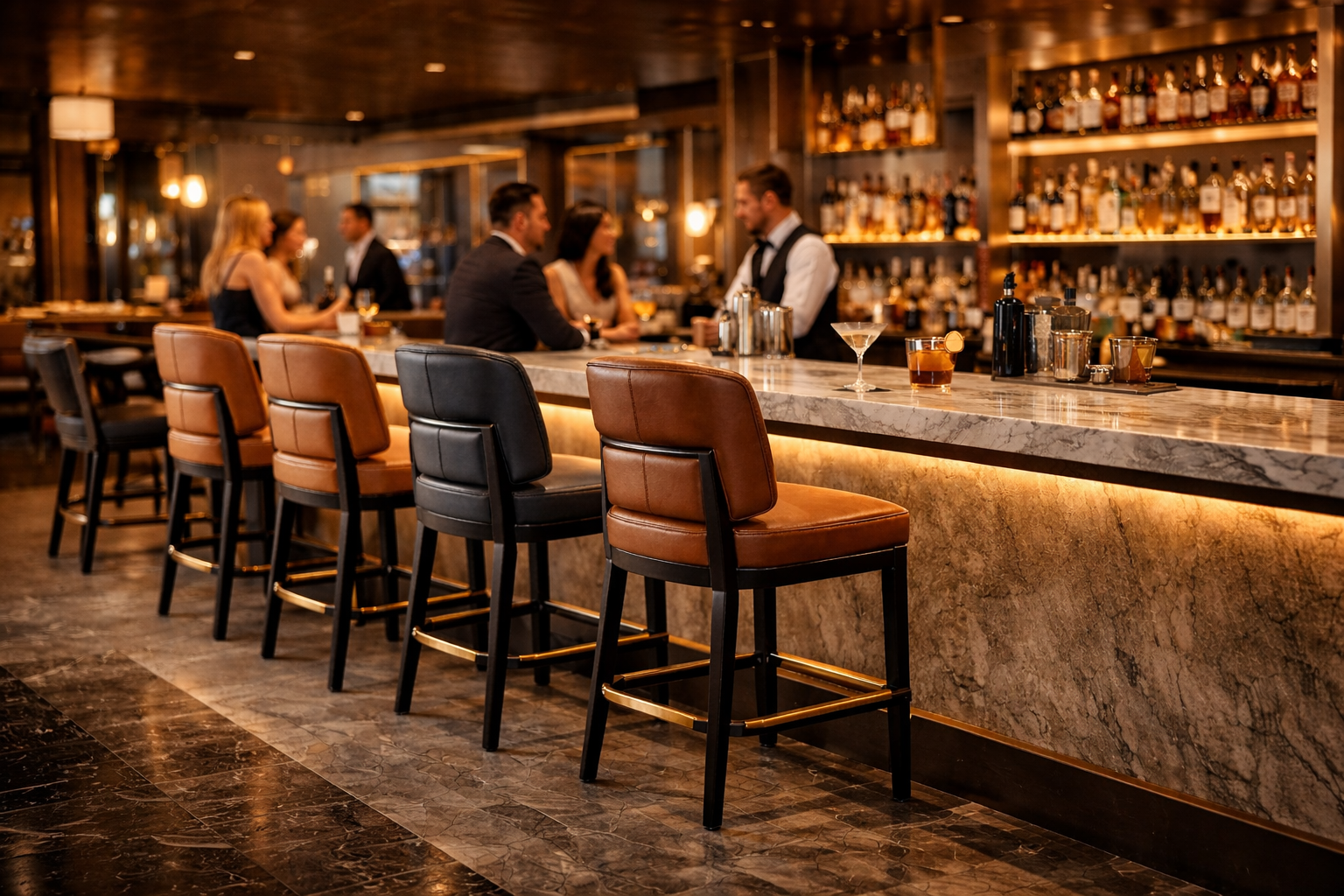
In 2026, hospitality design is no longer just about aesthetics. It is about performance, brand identity, and measurable return on investment. Across the United States, restaurants, hotels, rooftop lounges, and boutique cocktail bars are rethinking one of the most overlooked elements in their spaces: bar seating.
Premium bar stools with backs are quietly becoming a strategic upgrade. Operators are realizing that seating influences guest dwell time, check averages, online reviews, and even staff workflow. In an industry where margins are tight and competition is intense, even small improvements in comfort and perception can produce meaningful financial results.
The global hospitality industry continues to grow steadily, with food service revenue in the United States alone exceeding hundreds of billions of dollars annually. As competition intensifies, brands are investing in design features to differentiate. Bar stools with supportive backs are now part of that investment strategy, not just a decorative choice.
Comfort Directly Impacts Revenue Per Guest
Guest comfort is directly tied to spending behavior. Studies in hospitality management consistently show that when customers feel physically comfortable, they stay longer and order more. A supportive backrest may seem simple, yet it reduces fatigue during extended social gatherings, tasting menus, or sporting events.
When guests sit at a bar for ninety minutes instead of forty five, the difference shows up in beverage sales. Premium bar stools with backs provide lumbar support, encourage relaxed posture, and reduce the need for guests to shift frequently. This leads to:
- Longer dwell time at the bar
- Higher average check sizes
- Improved guest satisfaction scores
In busy urban markets where square footage can cost hundreds of dollars per square foot annually, maximizing revenue per seat is critical. Comfortable seating helps turn limited space into higher yielding real estate.
Elevated Perception of Brand Quality
Hospitality is built on perception. When guests walk into a venue, they subconsciously evaluate materials, finishes, and overall construction quality. Premium bar stools with backs often feature thicker foam, reinforced frames, welded joints, and durable upholstery, such as commercial-grade vinyl or performance fabrics.
These details communicate professionalism. A heavy-gauge steel frame or a solid hardwood base signals durability. Upholstered backs with refined stitching suggest attention to detail. The overall message is clear: this brand invests in quality.
In 2026, social media continues to influence restaurant discovery. Nearly 70 percent of diners report choosing restaurants based on the visual appeal they see online. Well-designed bar seating enhances photos, contributes to a cohesive aesthetic, and strengthens a venue’s identity in user-generated content.
Durability Reduces Long-Term Replacement Costs
While premium seating requires a higher upfront investment, it often reduces replacement frequency. Hospitality furniture in high-traffic environments can experience thousands of uses per month. Lower quality stools may wobble, loosen, or show visible wear within a year.
Premium bar stools with backs are typically engineered for commercial environments. They often include reinforced stretchers, heavy-duty glides, and weight capacities exceeding 300 pounds. This structural integrity lowers maintenance costs and decreases downtime caused by broken furniture.
Consider the financial comparison. Replacing a low-cost stool every 18 months versus a premium stool every 5 to 7 years dramatically changes the total cost of ownership. When multiplied across 40 or 60 seats in a bar, the savings become significant over time.
Ergonomics Aligns with Modern Guest Expectations
In 2026, wellness extends beyond food menus. Guests expect environments that feel supportive and thoughtfully designed. Ergonomic seating is no longer limited to office spaces. Hospitality brands are integrating posture-conscious design into dining rooms and bar areas.
Premium bar stools with backs offer:
- Proper seat height alignment with 42-inch bar counters
- Contoured back support that reduces strain
- Footrests positioned to encourage balanced posture
This alignment reduces discomfort, especially for older guests or those attending events that last several hours. Hotels and high-end lounges are particularly focused on creating spaces that feel welcoming to people of different ages and body types.
Competitive Differentiation in Saturated Markets
Major metropolitan areas in the United States continue to see growth in food and beverage concepts. With thousands of new restaurant openings each year, standing out is essential. Design becomes a primary tool for differentiation.
Premium bar stools with backs allow brands to create signature looks. Custom upholstery in brand colors, contrasting piping, or distinctive metal finishes can transform standard seating into a recognizable feature. Some brands even integrate logo embossing or custom stitching to reinforce identity.
This differentiation supports marketing efforts. When guests remember a venue for its comfort and style, repeat visits increase. Loyalty becomes less about price and more about experience.
Staff Efficiency and Operational Flow
Upgrading seating also affects operations behind the scenes. Stable, well-constructed bar stools reduce the risk of tipping or wobbling during busy service hours. Staff can move confidently around guests without having to adjust unstable furniture.
Heavier, balanced stools stay in place, helping maintain consistent spacing between seats. This consistency improves workflow and allows bartenders to serve more efficiently. In high-volume environments, even minor improvements in movement patterns can increase service speed and turnover rates.
Fewer maintenance issues also reduce interruptions. When stools do not require constant tightening or repairs, management can focus on the guest experience rather than reactive fixes.
Sustainability and Long-Term Value
Sustainability continues to shape purchasing decisions in hospitality. Durable furniture that lasts longer reduces landfill waste and lowers the carbon footprint associated with frequent replacements. Many premium manufacturers now use responsibly sourced wood, recyclable metals, and low-emission finishes.
Hospitality brands that invest in long-lasting bar stools with backs can highlight this commitment in their marketing. Guests increasingly appreciate businesses that align with environmental responsibility. Sustainable choices can strengthen brand reputation while delivering operational benefits.
A Strategic Seating Upgrade for 2026 and Beyond
The shift toward premium barstools with backs is not simply a design trend. It reflects a broader understanding of how physical space influences revenue, perception, and long term cost control.
In a competitive hospitality landscape, brands are looking beyond short term savings. They are investing in seating that supports comfort, reinforces brand identity, reduces replacement cycles, and enhances operational efficiency. When each seat contributes to both guest satisfaction and financial performance, the upgrade becomes a strategic decision rather than a decorative one.
As 2026 unfolds, the most successful hospitality concepts will continue to refine every detail of their environments. Premium bar stools with backs represent a small yet powerful step toward higher standards, stronger margins, and a more memorable guest experience.